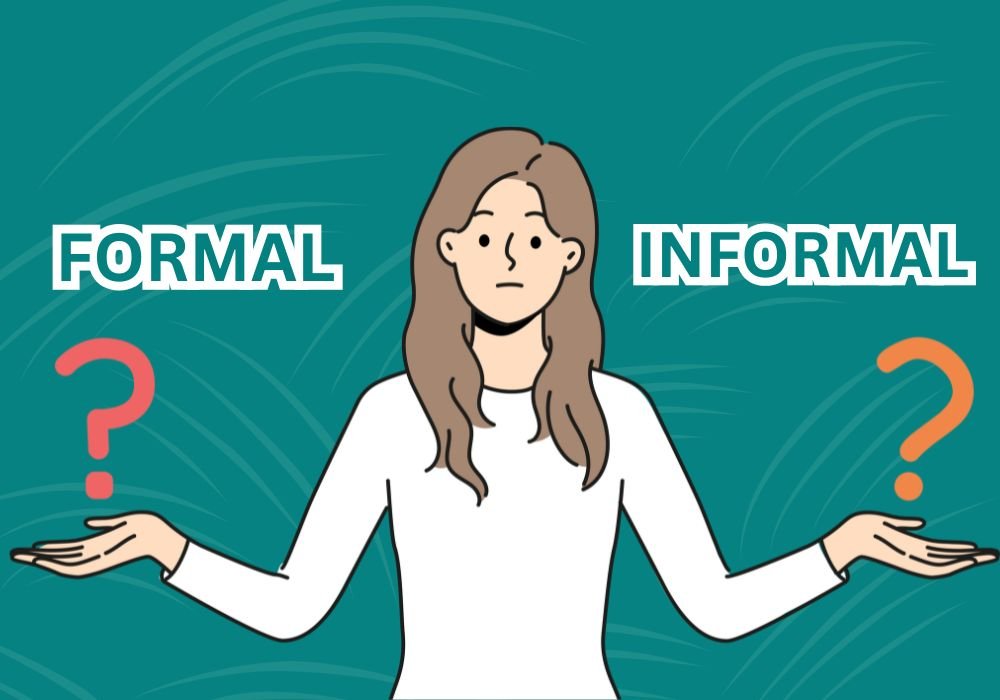
Indonesian has two main language styles that are commonly used in communication: formal and informal language.
Understanding the difference between the two is important, especially for students, professionals, and writers who want to communicate effectively in the right context.
This article discusses the definitions, differences, examples, and practical tips for using formal and informal language in everyday situations.
What Is Formal Language?
Formal language is a style of language used in official, academic, or professional settings. It generally follows standard grammar rules, uses clear vocabulary, and has well-structured sentences. Formal language is commonly found in official documents, speeches, formal letters, academic reports, and scholarly articles.
Example of formal language: “Dengan ini saya ingin menyampaikan permohonan izin tidak dapat hadir pada rapat yang dijadwalkan pada tanggal 20 Agustus 2025.”
What Is Informal Language?
By contrast, informal language is used in everyday conversations with friends, family, or in more relaxed situations. It tends to be more flexible and often includes abbreviations, slang, or sentence structures that do not always follow standard rules.
Example of informal language: “Sorry ya, aku nggak bisa ikut rapat besok, ada urusan mendadak.”
Key Differences Between Formal and Informal Language
- Context of use: Formal language is used in official situations, while informal language is used in everyday conversations.
- Sentence structure: Formal language follows standard sentence structures, while informal language is more flexible.
- Vocabulary: Formal language uses standard and polite wording, while informal language often includes abbreviations or slang.
- Purpose: Formal language emphasises clarity and professionalism, while informal language creates a sense of familiarity and comfort.
See Also: The Difference Between Formal and Informal Language in Indonesian
Examples of Formal and Informal Language
| Situation | Formal Language | Informal Language |
|---|---|---|
| Asking for permission | “Mohon izin tidak dapat hadir dalam rapat hari ini.” | “Gue nggak bisa ikut rapat hari ini ya.” |
| Expressing gratitude | “Terima kasih atas perhatian dan kerja samanya.” | “Makasih banget, ya!” |
| Giving information | “Rapat akan dilaksanakan pada pukul 09.00 WIB di ruang utama.” | “Rapatnya jam 9 di ruangan utama ya.” |
Why Is It Important to Understand Formal and Informal Language?
Being able to adjust your use of formal and informal language makes communication more effective. Using informal language in an official setting may be seen as impolite.
On the other hand, being too formal in a casual conversation can make you sound stiff. Understanding these differences helps you create a positive impression in academic, professional, and social settings.
Additional references can be found on Kompas Edu, which discusses the use of formal language in educational contexts, and Britannica, which explains the relationship between language and culture.
Tips for Using Formal and Informal Language Appropriately
- Know your audience: When speaking with lecturers, supervisors, or clients, use formal language. When talking with close friends, informal language is more suitable.
- Consider the communication channel: Business emails should use formal language, while personal text messages can be more relaxed.
- Avoid mixing styles: Do not mix formal and informal language in the same sentence, as this can confuse readers or listeners.
- Practise consistently: Build your confidence by regularly reading, writing, and speaking in both styles.
Learn Indonesian More Deeply
The difference between formal and informal language in Indonesian is not only about style, but also about context, politeness, and communication goals. Formal language prioritises clarity and professionalism, while informal language prioritises familiarity and comfort. By understanding when and how to use each style, you can become a more effective and thoughtful communicator.
If you would like to master formal and informal Indonesian, taking an Indonesian language course can be a practical way to improve. Lingua Learn offers language courses designed for learners of all backgrounds, including students and professionals. You can also join the Indonesian course for adults to communicate more confidently in everyday and professional settings.
 English
  Indonesian