
When President Prabowo instructed all levels of Indonesian schools to start learning French following his bilateral meeting with President Macron in Paris in May 2026, the reaction was mixed, to put it mildly.
Teachers were caught off guard, education associations pushed back, and the Ministry of Education said they’d “study the directive.” But regardless of how that policy plays out in the classroom, one thing was clear: interest in French spiked almost immediately.
And honestly, that tracks. French has been quietly growing in Indonesia for years, with over 150,000 Indonesians enrolling in French language programs annually through schools, universities, Alliance Française branches, and private institutions.
The hospitality sector in Bali alone has a steady stream of hotel and tourism workers learning French for career reasons.
Add to that the students preparing for exchange programs, the professionals eyeing opportunities with French multinationals, and the genuinely curious language lovers, and you’ve got a pretty diverse group of learners looking for the same thing: a good place to start online.
The problem is, “good place to start” looks different depending on who you are. Here’s how to figure out what you actually need.
Before you open a single tab, this question is worth sitting with, because different platforms are built around completely different philosophies.
If you absorb things better through watching and listening than through reading grammar tables, look for platforms that use real spoken French as the core of their content. Pronunciation in French is notoriously different from how words are written, and for Indonesian learners especially, getting your ears calibrated early makes a significant difference down the road.
Indonesian learners, based on research on app usage patterns in the country, tend to use self-study tools sporadically, driven more by curiosity than long-term commitment.
Guys, this is a real pattern and it’s worth being honest about. If that sounds familiar, a structured program with a clear curriculum and a real teacher is going to serve you far better than an open-ended app where you can skip whenever you feel like it.
A lot of popular platforms are solid at building passive recognition, you’ll understand grammar rules, recognize vocabulary, read basic French.
But speaking is where most learners stall, and most apps offer almost zero real conversation practice. If your goal involves actually talking in French, whether for work, travel, or an exchange program, you need a platform with live interaction built in.
DELF/DALF certification, university entrance in francophone countries, or professional French for a specific industry all have different requirements.
Not every platform covers exam preparation properly, so if this is your goal, check specifically whether the curriculum aligns with what you’re being tested on.
Apps can take you a certain distance, and they’re useful for building vocabulary and daily habits. But the research is pretty consistent: learners who have access to real-time feedback from a qualified instructor make fewer errors that get embedded as bad habits. If a platform offers no live component at all, treat it as a supplement, not a complete solution.
Many platforms are excellent at beginner content and get noticeably thinner at intermediate and advanced levels. If you’re already past A2, check what the upper levels genuinely look like before you commit. Hitting a ceiling three months in is genuinely discouraging.
There’s a big difference between recording yourself and getting an automated score, and having an actual conversation with a teacher who can hear your word choice, catch your hesitation patterns, and give you real feedback. Ask specifically how speaking is incorporated, not just whether it is.
One of the most consistent findings in Indonesian French learning research is that students plateau at B1 level, partly because of inconsistent practice.
A platform that works with your actual schedule, rather than assuming you have two hours a day free, is more likely to keep you moving. Online classes with flexible timing are worth prioritizing for this reason.
Any decent platform should offer a trial lesson or free introductory content. This tells you more than any marketing page. You’ll quickly know whether the teaching style clicks, whether the pace feels right, and whether you can actually see yourself showing up consistently.
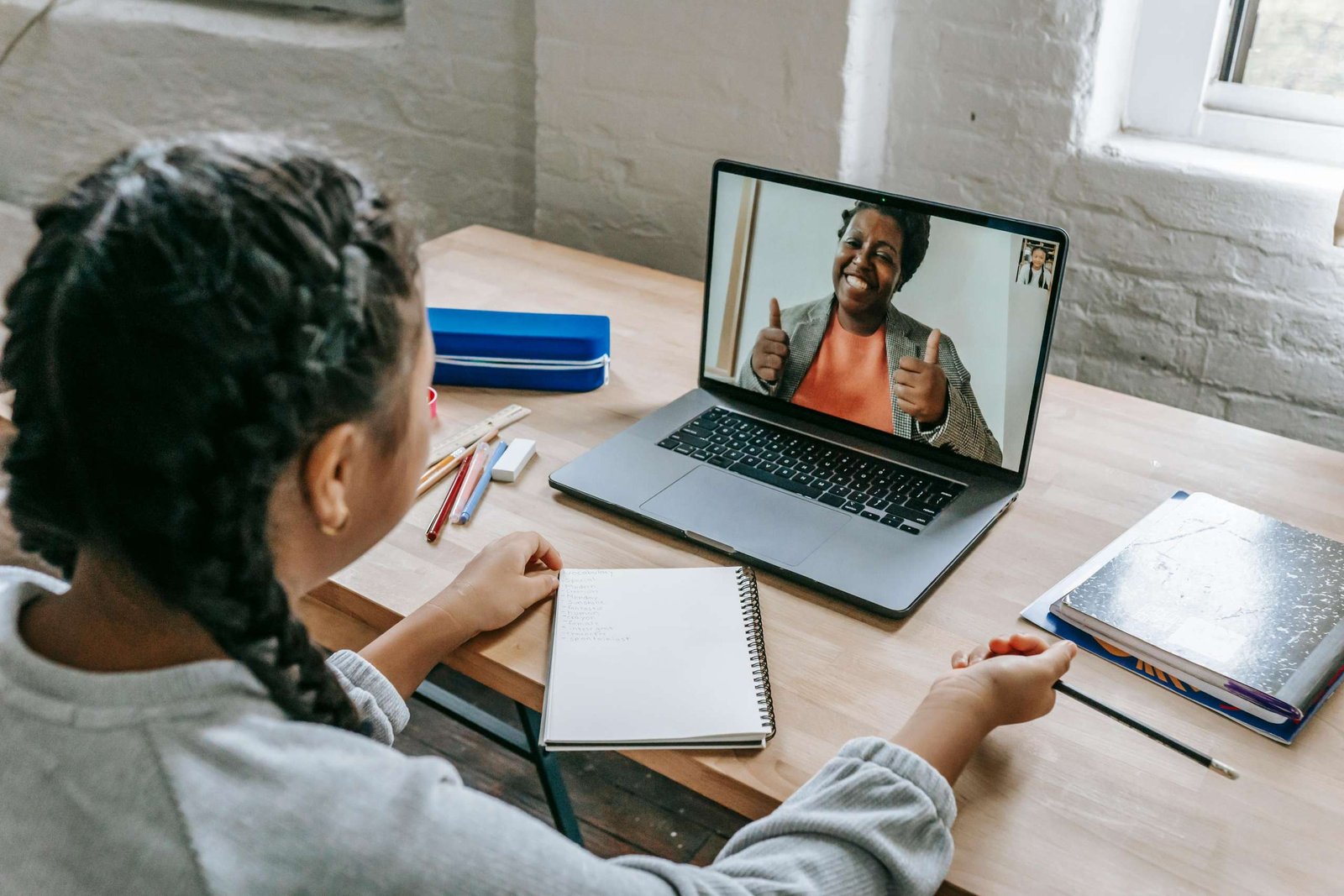
No app or website fully replaces a qualified teacher who can hear what you’re doing wrong, adjust to your specific gaps, and push you past the plateau that stops most self-study learners.
Online platforms are genuinely useful for building vocabulary, training your ear, and staying consistent between lessons. But for Indonesian learners who tend to engage sporadically with self-study tools, having that structured accountability makes a real difference.
At Lingua Learn, our French courses are built around live instruction with qualified teachers and flexible online scheduling that works around your life. Whether you’re starting from scratch or picking up from where school left off, our assessment test will tell you exactly where you stand and where to go from there.
 English
  Indonesian